Q&A
WHO ARE THE MARIAMITE CHRISTIAN ORTHODOX FATHERS, KNOWN AS THE MARIAMITE FATHERS?
We are part of an Orthodox Congregation. The term “MARIAMITE” refers to the brothers and priests who are members of The Mariamite Orthodox Fathers, Community of Mary. The word Mariamite comes from the Hebrew Miryam (מרים), which became Maryam (ܡܪܝܡ) or Mariam in Aramaic, the language Jesus and his mother spoke. In English its Mary. WHAT DOES THE MARIAMITE CHRISTIAN ORTHODOX FATHERS DO? The Mariamite Christian Orthodox Brothers and Priests serve God’s people in a variety of ways. Many are educators, others serve parishes and missions, or in professions careers in societies
. WHAT MAKES THE MARIAMITES DIFFERENT FROM OTHER RELIGIOUS COMMUNITIES?
The Mariamite Christian Orthodox Fathers are distinguished by the unique charism. A charism is a gift given by the Holy Spirit for the benefit of God’s people. We are being called by God, formed by the Ever Virgin Mary and sent on the mission of Christ to embody the Good News in one’s time and place. Our mission underlines community, inclusivity, faith, and service to the needy. Members of our religious order seek to continue the Blessed Mother’s mission of bringing Christ to the world.
HOW DO YOU DESCRIBE YOURSELF?
We describe ourselves as spiritual people who believe in a loving God living and acting through service and prayer. We as Mariamite Christian Fathers, we turn to Mary, the Theotokos as a model for Christian living. She lived a life free from sin and in service to God. This is the life we aspire to live.
HOW ARE YOU GOVERNED?
Our governing structure follows the Eastern Churches governing structure of religious communities. We are headed by a Metropolitan Archbishop who is the Primate.
WHAT VOWS YOU TAKE?
Members of our monastic community take the following vows: poverty, chastity and obedience.
HOW DO YOU SUPPORT YOURSELF AND YOUR MISSIONARY WORK?
As Saint Paul supported himself by making tents, to support his ministry of witnessing to Christ (Acts 18:1–4), so we as members, we support ourselves and the Society by working secular jobs. We do not ask for any donations or support.
WHERE DO YOU WORK?
We work wherever we are needed. Our base is Great Britain. We worked in: Kerala- India, Myanmar-Yangon, Beirut-Lebanon, Juba- South Sudan, Kampala-Uganda, Cairo-Egypt, Belgrade- Serbia, Manila-Philippines, USA and United Kingdom.
WHERE DO YOU STAND WITH RESPECT TO CANON LAW?
Our guide in matters related to Canon Law is the Code of Canons of the Orthodox Church.
HOW MANY MYSTERIES (SACRAMENTS) YOU HAVE?
In the Christian East tradition the "Sacraments" are called "Mysteries". This is because they vessels of mystical participation in Divine Grace. Saint John Chrysostom taught that we call them mysteries because what we believe is not fully shown in what we see. The Latin "sacramentum" means "to consecrate" and comes from the Greek "mysterion". The Holy Mysteries are as follows:
+ Baptism
+ Chrismation
+ Eucharist
+ Confession
+ Anointing
+ Marriage
+ Ordination
The first three Mysteries are administered together, typically to infants but also to adults when joining Christ's Church. The Mystery of Anointing is administered not just to the dying, but to anyone in need of healing (James 5:14-15). It is also offered in parishes on Holy Wednesday to everyone who seeks it, as a preparation for the remembrance of the Cross and Resurrection.
WHAT DO YOU SAY ABOUT THE APOSTLES?
The twelve disciples/apostles of Jesus were the foundation stones of His church, several even wrote portions of the Bible. As we study these courageous first century lives, and what discipleship meant in the time of Jesus, we may expect to be aided in developing a Spirit-directed twenty-first-century discipleship as Christ must have meant it to be. Although we remember each of the Twelve Apostles at different times throughout the year, on June 30th (Eastern Rite) we celebrate the Synaxis o, f the 12 Apostles, a general remembrance for all of them with liturgical services and hymns that honour their contributions to the Church.
WHAT DO SAY ABOUT THE SAINTS?
The Church Fathers included the commemoration of many Martyrs and other Saints in the liturgical year. The Second Vatican Council reminds us that the Martyrs and Saints, being “raised to holiness by abundant graces of God and already in possession of their eternal salvation, sing constant praises to God in heaven and offer prayers for us” (ct. Decree on the Liturgy, n. 104). By celebrating the passage of the Saints from the earth to heaven, the Church also proposes them to us as so many examples of genuine Christian living. The veneration of the Saints has a similar purpose. This began in the first century, first the Veneration of the Martyrs and then of the Apostles. Soon other Saints were added. Between the fourth and the fifth centuries the veneration of the Saints became a general practice, ceding the first place to St. John the Baptist (after the Blessed Mother and the Angels), in view of Christ’s testimony: “There is no one greater than John!” (Lk. 7:28). The Saints usually are commemorated on the anniversary of their death, since the departure of those “that died in the Lord” (Rom. 14:8) was considered by the Christians as a day of birth to a new and happy life with God.
WHAT CAN YOU TELL US ABOUT ICONS & ICONOGRAPHY?
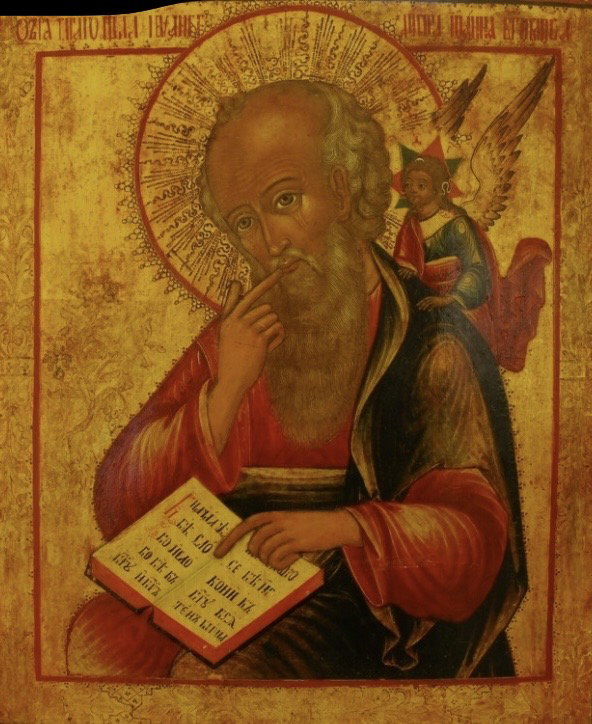
Icons play a central role in the liturgical and spiritual lives in the Eastern Christian tradition. They adorn the walls and sanctuaries of our Churches and are frequently carried in processions. It is not uncommon for Eastern Rite Christian to have an "icon corner" in their home designated for prayer. Rich theology of icons manifests to us something of the hidden spiritual realities that they represent. Icons are windows into the spiritual world. They help us to look into eternity, and they make the historical events of our salvation, as revealed in Scripture, present to us. They are truly "theology in colour." Through their many symbols, icons allow us to touch the mysteries they represent. They tell us the story of what happened in the events they depict. It is common to hear of someone "writing icons" rather than "painting" them. We do not worship the icons, but only persons they depict. As a picture of a loved one helps us to keep him or her close to our heart, so too do the icons help in our prayer to be in the presence of God, to feel close to Him, the Mother of God, and all the saints and angels. They help us to know that God, the Theotokos, and the saints and angels are always close to us.
WHAT IS YOUR DIVINE LITURGY?
The Divine Liturgy (Mass) is the central experience of Faith in the Christian Eastern Tradition. Through it, we participate in the supernatural life, receive inspiration for our spiritual lives, and are catechized in a profound and foundational way. Simply meditating on the prayers of the Divine Liturgy totally immerses one in the mysteries of salvation and the teaching of the Church. The Liturgy connects the whole Church - Her past, present, and future, uniting us with all the saints and angels, as well as the believers from all times (the Pilgrim Church, Suffering Church, and Glorified Church). The Divine Liturgy is composed of three main parts: The Prothesis (or proskomedia), the service preparing the holy gifts The Liturgy of the Catechumens, or the Liturgy of the Word the Liturgy of the Faithful, or Liturgy of the Eucharist. We have three liturgies that are used throughout the year: The Divine Liturgy of St. John Chrysostom, celebrated on most Sundays throughout the year and most weekdays. The Divine Liturgy of St. Basil celebrated only ten times during the liturgical year, most notably on the first five Sundays of Lent and Christmas Eve. The Divine Liturgy of St. Gregory the Dialogist, also known as the Liturgy of the Presanctified Gifts, celebrated during the weekdays of Lent especially on Wednesdays and Fridays.
WHAT IS YOUR UNDERSTANDING ON THE VIRGIN MARY?
The Virgin Mary, the Theotokos (in Greek word that means “God-bearer or Birth-giver to God”, the mother of Jesus Christ, the Son and Word of God. She conceived by the power of the Holy Spirit. It is our belief and tradition that the holy Virgin was a virgin before, during and after the birth of Christ. Our devotion to the Virgin Mary the Theotokos is not merely a matter of popular piety. It is also an expression of the central teaching of the Catholic Church, the doctrine of the Incarnation of Christ. Mary to us represents the submission of humanity to the will of God.
WHAT IS THE TRANSLATION OF THE WORD THEOTOKOS?
While some languages used by various Eastern Byzantine Churches often have a single native word for Theotokos, it gets translated into English in several ways. The most common is Mother of God, though God-bearer and Birth-giver to God are also common. There are difficulties with all these translations, however. The most literally correct one is Birth-giver to God, though God-bearer comes close.
I READ IN THE BYZANTINE EASTERN RITE CHURCH TRADITION; THERE ARE WEEKLY CHURCH CYCLES. WHAT ARE THEY?
Each day of the week has its own commemoration: 1) Sunday - Resurrection of Christ 2) Monday - The Holy Angels 3) Tuesday - St. John the Forerunner 4) Wednesday - The Cross and the Theotokos 5) Thursday - The Holy Apostles and St. Nicholas 6) Friday - The Cross 7) Saturday - All Saints and the departed.
WHAT ABOUT ADVENT?
The Eastern Byzantine Liturgical year does not use the Roman Catholic structure and terminology for cretin seasons. In the Eastern Rite Tradition, the season prior to Christmas, known in the Latin Church as Advent, is called the Nativity Fast.
YOU TALK ABOUT THE CHURCH AS UNITY IN THE TRUTH AND LOVE OF GOD.WHAT DO YOU MEAN BY THIS?
We believe that the life of the Church is life in communion with God Himself, in the Truth and Love of Christ, by the Holy Spirit. We believe that Christ is the Son of God. We believe that He reveals the truth about God and man. We believe that we can know this truth by the Spirit of Truth, the Holy Spirit that He gives to us. The greatest truth shown to us by Christ is that God is Love, and that the only true way of living is by following Christ who called Himself, the Way, the Truth, and the Life. Christ gave the great commandment and the great example of perfect love. Thus, the greatest truth is love. This is our conclusion. And life in this truth which is love is the life of faith, the life of the Holy Church. Of course, there are deviations and betrayals and sins all around. Clergy and laymen alike are guilty. But the Church itself, despite the sins of its members, is still the union with the Truth and Love of God given to men in Jesus Christ, made present and accessible in the Holy Spirit, who lives in those who believe.
WHAT ARE YOUR RELIGIOUS HABITS AND YOUR LITURGICAL VESTMENTS?
+ Our religious habit as in Eastern Byzantine tradition; black Cassock woollen material (represent Poverty) and a black leather girdle / belt (represent Chastity). A black vest can be worn if needed.
+ Our Liturgical vestments are Greek style Byzantine Vestments.
WHICH LITURGICAL CALENDAR YOU FOLLOW?
We follow the Revised Julian Calendar that is followed and adopted by: the Ecumenical Patriarchate of Constantinople, the Orthodox Autocephalous Church of Albania, the Greek Orthodox Church of Alexandria, the Greek Orthodox Church of Antioch, the Bulgarian Orthodox Church, the Romanian Orthodox Church, the Cypriot Orthodox Church, the Church of Greece, the Orthodox Church of the Czech Lands and Slovakia, the Orthodox Church of Ukraine, Orthodox Church in America and the Orthodox Church of America, also many Eastern Byzantine Catholic Churches as well, such as the Ukrainian Greek Catholic Church, the Bulgarian Greek Catholic Church, the Romanian Greek Catholic Church and some parishes of the Melkite Greek Catholic Church in the Middle East.
HOW DO YOU UNDERSTAND FREEDOM?
Freedom is one of God’s greatest gifts to the human being. He who created man in the beginning made him free and self-determined, limiting him solely by the laws of the commandment (Gregory the Theologian, Homily 14, On Love for the Poor, 25. PG 35, 892A). Freedom renders the human being capable of progressing toward spiritual perfection; yet it also includes the risk of disobedience as independence from God and consequently the fall, which tragically gives rise to evil in the world.
WHAT IS YOUR UNDERSTANDING TO MARRIAGE?
In our understanding, marriage is the oldest institution of divine law because it was instituted simultaneously with the creation of Adam and Eve, the first human beings (Gen 2:23). Since its origin, this union not only implies the spiritual communion of a married couple a man and a woman but also assured the continuation of humanity. As such, the marriage of man and woman, which was blessed in Paradise, became a holy mystery, as mentioned in the New Testament where Christ performs His first sign, turning water into wine at the wedding in Cana of Galilee, and th us reveals His glory (Jn 2:11). The mystery of the indissoluble union between man and woman is an icon of the unity of Christ and the Church (Eph 5:32).
The Church consider the union of man and woman in Christ constitutes “a small church” or an icon of the Church. Through God’s blessing, the union of man and woman is elevated to a higher level, for communion is greater than individual existence because it initiates the spouses into the order of the Kingdom of the All-Holy Trinity. A necessary condition of marriage is faith in Jesus Christ, which must be shared by the bridegroom and the bride, man and woman. Consequently, unity in Christ is the foundation of marital unity. Thus, marital love blessed by the Holy Spirit enables the couple to reflect the love between Christ and the Church as a mystery of the Kingdom of God—as the eternal life of humanity in the love of God. As for civil marriage between a man and a woman registered in accordance with the law lacks sacramental character since it is a simple legalized cohabitation recognized by the State, different from a marriage blessed by God and the Church.
The members of the Church who contract a civil marriage ought to be regarded with pastoral responsibility, which is necessary to help them understand the value of the sacrament of marriage and the blessings connected with it. The Church does not allow for her members to contract same-sex unions or any other form of cohabitation apart from marriage. The Church exerts all possible pastoral efforts to help her members who enter such unions understand the true meaning of repentance and love as blessed by the Church. The grave consequences brought about by this crisis of the institutions of marriage and the family are manifested in the frightening increase in the number of divorces, abortions, and other problems of family life. These consequences constitute a great challenge to the mission of the Church in the modern world, which is why the shepherds of the Church are obligated to make every possible effort to address these problems. The Church lovingly invites her children and all people of good will to defend this fidelity to the sacredness of the family.
WHAT IS YOUR UNDERSTANDING TO THE SPECIAL PASTORAL CARE FOR YOUNG PEOPLE?
The Church’s special pastoral care for young people represents an unceasing and unchanging Christ-cantered process of formation. Of course, the pastoral responsibility of the Church also extends to the divinely granted institution of family, which has always been and must always be founded on the sacred mystery of Christian marriage as a union between man and woman, as reflected in the union of Christ and His Church (Eph 5:32). This is especially vital considering attempts in certain countries to legalize and in certain Christian communities to justify theologically other forms of human cohabitation that are contrary to Christian tradition and teaching. The Church hopes for the recapitulation of everything in the Body of Christ, it reminds every person coming into the world, that Christ will return at His Second Coming judging the living and the dead (1 Pet 4, 5) and that His Kingdom shall have no end (Lk 1:33)
WHO ARE THE MARIAMITE CHRISTIAN ORTHODOX FATHERS, KNOWN AS THE MARIAMITE FATHERS?
We are part of an Orthodox Congregation. The term “MARIAMITE” refers to the brothers and priests who are members of The Mariamite Orthodox Fathers, Community of Mary. The word Mariamite comes from the Hebrew Miryam (מרים), which became Maryam (ܡܪܝܡ) or Mariam in Aramaic, the language Jesus and his mother spoke. In English its Mary. WHAT DOES THE MARIAMITE CHRISTIAN ORTHODOX FATHERS DO? The Mariamite Christian Orthodox Brothers and Priests serve God’s people in a variety of ways. Many are educators, others serve parishes and missions, or in professions careers in societies
. WHAT MAKES THE MARIAMITES DIFFERENT FROM OTHER RELIGIOUS COMMUNITIES?
The Mariamite Christian Orthodox Fathers are distinguished by the unique charism. A charism is a gift given by the Holy Spirit for the benefit of God’s people. We are being called by God, formed by the Ever Virgin Mary and sent on the mission of Christ to embody the Good News in one’s time and place. Our mission underlines community, inclusivity, faith, and service to the needy. Members of our religious order seek to continue the Blessed Mother’s mission of bringing Christ to the world.
HOW DO YOU DESCRIBE YOURSELF?
We describe ourselves as spiritual people who believe in a loving God living and acting through service and prayer. We as Mariamite Christian Fathers, we turn to Mary, the Theotokos as a model for Christian living. She lived a life free from sin and in service to God. This is the life we aspire to live.
HOW ARE YOU GOVERNED?
Our governing structure follows the Eastern Churches governing structure of religious communities. We are headed by a Metropolitan Archbishop who is the Primate.
WHAT VOWS YOU TAKE?
Members of our monastic community take the following vows: poverty, chastity and obedience.
HOW DO YOU SUPPORT YOURSELF AND YOUR MISSIONARY WORK?
As Saint Paul supported himself by making tents, to support his ministry of witnessing to Christ (Acts 18:1–4), so we as members, we support ourselves and the Society by working secular jobs. We do not ask for any donations or support.
WHERE DO YOU WORK?
We work wherever we are needed. Our base is Great Britain. We worked in: Kerala- India, Myanmar-Yangon, Beirut-Lebanon, Juba- South Sudan, Kampala-Uganda, Cairo-Egypt, Belgrade- Serbia, Manila-Philippines, USA and United Kingdom.
WHERE DO YOU STAND WITH RESPECT TO CANON LAW?
Our guide in matters related to Canon Law is the Code of Canons of the Orthodox Church.
HOW MANY MYSTERIES (SACRAMENTS) YOU HAVE?
In the Christian East tradition the "Sacraments" are called "Mysteries". This is because they vessels of mystical participation in Divine Grace. Saint John Chrysostom taught that we call them mysteries because what we believe is not fully shown in what we see. The Latin "sacramentum" means "to consecrate" and comes from the Greek "mysterion". The Holy Mysteries are as follows:
+ Baptism
+ Chrismation
+ Eucharist
+ Confession
+ Anointing
+ Marriage
+ Ordination
The first three Mysteries are administered together, typically to infants but also to adults when joining Christ's Church. The Mystery of Anointing is administered not just to the dying, but to anyone in need of healing (James 5:14-15). It is also offered in parishes on Holy Wednesday to everyone who seeks it, as a preparation for the remembrance of the Cross and Resurrection.
WHAT DO YOU SAY ABOUT THE APOSTLES?
The twelve disciples/apostles of Jesus were the foundation stones of His church, several even wrote portions of the Bible. As we study these courageous first century lives, and what discipleship meant in the time of Jesus, we may expect to be aided in developing a Spirit-directed twenty-first-century discipleship as Christ must have meant it to be. Although we remember each of the Twelve Apostles at different times throughout the year, on June 30th (Eastern Rite) we celebrate the Synaxis o, f the 12 Apostles, a general remembrance for all of them with liturgical services and hymns that honour their contributions to the Church.
WHAT DO SAY ABOUT THE SAINTS?
The Church Fathers included the commemoration of many Martyrs and other Saints in the liturgical year. The Second Vatican Council reminds us that the Martyrs and Saints, being “raised to holiness by abundant graces of God and already in possession of their eternal salvation, sing constant praises to God in heaven and offer prayers for us” (ct. Decree on the Liturgy, n. 104). By celebrating the passage of the Saints from the earth to heaven, the Church also proposes them to us as so many examples of genuine Christian living. The veneration of the Saints has a similar purpose. This began in the first century, first the Veneration of the Martyrs and then of the Apostles. Soon other Saints were added. Between the fourth and the fifth centuries the veneration of the Saints became a general practice, ceding the first place to St. John the Baptist (after the Blessed Mother and the Angels), in view of Christ’s testimony: “There is no one greater than John!” (Lk. 7:28). The Saints usually are commemorated on the anniversary of their death, since the departure of those “that died in the Lord” (Rom. 14:8) was considered by the Christians as a day of birth to a new and happy life with God.
WHAT CAN YOU TELL US ABOUT ICONS & ICONOGRAPHY?
Icons play a central role in the liturgical and spiritual lives in the Eastern Christian tradition. They adorn the walls and sanctuaries of our Churches and are frequently carried in processions. It is not uncommon for Eastern Rite Christian to have an "icon corner" in their home designated for prayer. Rich theology of icons manifests to us something of the hidden spiritual realities that they represent. Icons are windows into the spiritual world. They help us to look into eternity, and they make the historical events of our salvation, as revealed in Scripture, present to us. They are truly "theology in colour." Through their many symbols, icons allow us to touch the mysteries they represent. They tell us the story of what happened in the events they depict. It is common to hear of someone "writing icons" rather than "painting" them. We do not worship the icons, but only persons they depict. As a picture of a loved one helps us to keep him or her close to our heart, so too do the icons help in our prayer to be in the presence of God, to feel close to Him, the Mother of God, and all the saints and angels. They help us to know that God, the Theotokos, and the saints and angels are always close to us.
WHAT IS YOUR DIVINE LITURGY?
The Divine Liturgy (Mass) is the central experience of Faith in the Christian Eastern Tradition. Through it, we participate in the supernatural life, receive inspiration for our spiritual lives, and are catechized in a profound and foundational way. Simply meditating on the prayers of the Divine Liturgy totally immerses one in the mysteries of salvation and the teaching of the Church. The Liturgy connects the whole Church - Her past, present, and future, uniting us with all the saints and angels, as well as the believers from all times (the Pilgrim Church, Suffering Church, and Glorified Church). The Divine Liturgy is composed of three main parts: The Prothesis (or proskomedia), the service preparing the holy gifts The Liturgy of the Catechumens, or the Liturgy of the Word the Liturgy of the Faithful, or Liturgy of the Eucharist. We have three liturgies that are used throughout the year: The Divine Liturgy of St. John Chrysostom, celebrated on most Sundays throughout the year and most weekdays. The Divine Liturgy of St. Basil celebrated only ten times during the liturgical year, most notably on the first five Sundays of Lent and Christmas Eve. The Divine Liturgy of St. Gregory the Dialogist, also known as the Liturgy of the Presanctified Gifts, celebrated during the weekdays of Lent especially on Wednesdays and Fridays.
WHAT IS YOUR UNDERSTANDING ON THE VIRGIN MARY?
The Virgin Mary, the Theotokos (in Greek word that means “God-bearer or Birth-giver to God”, the mother of Jesus Christ, the Son and Word of God. She conceived by the power of the Holy Spirit. It is our belief and tradition that the holy Virgin was a virgin before, during and after the birth of Christ. Our devotion to the Virgin Mary the Theotokos is not merely a matter of popular piety. It is also an expression of the central teaching of the Catholic Church, the doctrine of the Incarnation of Christ. Mary to us represents the submission of humanity to the will of God.
WHAT IS THE TRANSLATION OF THE WORD THEOTOKOS?
While some languages used by various Eastern Byzantine Churches often have a single native word for Theotokos, it gets translated into English in several ways. The most common is Mother of God, though God-bearer and Birth-giver to God are also common. There are difficulties with all these translations, however. The most literally correct one is Birth-giver to God, though God-bearer comes close.
I READ IN THE BYZANTINE EASTERN RITE CHURCH TRADITION; THERE ARE WEEKLY CHURCH CYCLES. WHAT ARE THEY?
Each day of the week has its own commemoration: 1) Sunday - Resurrection of Christ 2) Monday - The Holy Angels 3) Tuesday - St. John the Forerunner 4) Wednesday - The Cross and the Theotokos 5) Thursday - The Holy Apostles and St. Nicholas 6) Friday - The Cross 7) Saturday - All Saints and the departed.
WHAT ABOUT ADVENT?
The Eastern Byzantine Liturgical year does not use the Roman Catholic structure and terminology for cretin seasons. In the Eastern Rite Tradition, the season prior to Christmas, known in the Latin Church as Advent, is called the Nativity Fast.
YOU TALK ABOUT THE CHURCH AS UNITY IN THE TRUTH AND LOVE OF GOD.WHAT DO YOU MEAN BY THIS?
We believe that the life of the Church is life in communion with God Himself, in the Truth and Love of Christ, by the Holy Spirit. We believe that Christ is the Son of God. We believe that He reveals the truth about God and man. We believe that we can know this truth by the Spirit of Truth, the Holy Spirit that He gives to us. The greatest truth shown to us by Christ is that God is Love, and that the only true way of living is by following Christ who called Himself, the Way, the Truth, and the Life. Christ gave the great commandment and the great example of perfect love. Thus, the greatest truth is love. This is our conclusion. And life in this truth which is love is the life of faith, the life of the Holy Church. Of course, there are deviations and betrayals and sins all around. Clergy and laymen alike are guilty. But the Church itself, despite the sins of its members, is still the union with the Truth and Love of God given to men in Jesus Christ, made present and accessible in the Holy Spirit, who lives in those who believe.
WHAT ARE YOUR RELIGIOUS HABITS AND YOUR LITURGICAL VESTMENTS?
+ Our religious habit as in Eastern Byzantine tradition; black Cassock woollen material (represent Poverty) and a black leather girdle / belt (represent Chastity). A black vest can be worn if needed.
+ Our Liturgical vestments are Greek style Byzantine Vestments.
WHICH LITURGICAL CALENDAR YOU FOLLOW?
We follow the Revised Julian Calendar that is followed and adopted by: the Ecumenical Patriarchate of Constantinople, the Orthodox Autocephalous Church of Albania, the Greek Orthodox Church of Alexandria, the Greek Orthodox Church of Antioch, the Bulgarian Orthodox Church, the Romanian Orthodox Church, the Cypriot Orthodox Church, the Church of Greece, the Orthodox Church of the Czech Lands and Slovakia, the Orthodox Church of Ukraine, Orthodox Church in America and the Orthodox Church of America, also many Eastern Byzantine Catholic Churches as well, such as the Ukrainian Greek Catholic Church, the Bulgarian Greek Catholic Church, the Romanian Greek Catholic Church and some parishes of the Melkite Greek Catholic Church in the Middle East.
HOW DO YOU UNDERSTAND FREEDOM?
Freedom is one of God’s greatest gifts to the human being. He who created man in the beginning made him free and self-determined, limiting him solely by the laws of the commandment (Gregory the Theologian, Homily 14, On Love for the Poor, 25. PG 35, 892A). Freedom renders the human being capable of progressing toward spiritual perfection; yet it also includes the risk of disobedience as independence from God and consequently the fall, which tragically gives rise to evil in the world.
WHAT IS YOUR UNDERSTANDING TO MARRIAGE?
In our understanding, marriage is the oldest institution of divine law because it was instituted simultaneously with the creation of Adam and Eve, the first human beings (Gen 2:23). Since its origin, this union not only implies the spiritual communion of a married couple a man and a woman but also assured the continuation of humanity. As such, the marriage of man and woman, which was blessed in Paradise, became a holy mystery, as mentioned in the New Testament where Christ performs His first sign, turning water into wine at the wedding in Cana of Galilee, and th us reveals His glory (Jn 2:11). The mystery of the indissoluble union between man and woman is an icon of the unity of Christ and the Church (Eph 5:32).
The Church consider the union of man and woman in Christ constitutes “a small church” or an icon of the Church. Through God’s blessing, the union of man and woman is elevated to a higher level, for communion is greater than individual existence because it initiates the spouses into the order of the Kingdom of the All-Holy Trinity. A necessary condition of marriage is faith in Jesus Christ, which must be shared by the bridegroom and the bride, man and woman. Consequently, unity in Christ is the foundation of marital unity. Thus, marital love blessed by the Holy Spirit enables the couple to reflect the love between Christ and the Church as a mystery of the Kingdom of God—as the eternal life of humanity in the love of God. As for civil marriage between a man and a woman registered in accordance with the law lacks sacramental character since it is a simple legalized cohabitation recognized by the State, different from a marriage blessed by God and the Church.
The members of the Church who contract a civil marriage ought to be regarded with pastoral responsibility, which is necessary to help them understand the value of the sacrament of marriage and the blessings connected with it. The Church does not allow for her members to contract same-sex unions or any other form of cohabitation apart from marriage. The Church exerts all possible pastoral efforts to help her members who enter such unions understand the true meaning of repentance and love as blessed by the Church. The grave consequences brought about by this crisis of the institutions of marriage and the family are manifested in the frightening increase in the number of divorces, abortions, and other problems of family life. These consequences constitute a great challenge to the mission of the Church in the modern world, which is why the shepherds of the Church are obligated to make every possible effort to address these problems. The Church lovingly invites her children and all people of good will to defend this fidelity to the sacredness of the family.
WHAT IS YOUR UNDERSTANDING TO THE SPECIAL PASTORAL CARE FOR YOUNG PEOPLE?
The Church’s special pastoral care for young people represents an unceasing and unchanging Christ-cantered process of formation. Of course, the pastoral responsibility of the Church also extends to the divinely granted institution of family, which has always been and must always be founded on the sacred mystery of Christian marriage as a union between man and woman, as reflected in the union of Christ and His Church (Eph 5:32). This is especially vital considering attempts in certain countries to legalize and in certain Christian communities to justify theologically other forms of human cohabitation that are contrary to Christian tradition and teaching. The Church hopes for the recapitulation of everything in the Body of Christ, it reminds every person coming into the world, that Christ will return at His Second Coming judging the living and the dead (1 Pet 4, 5) and that His Kingdom shall have no end (Lk 1:33)